
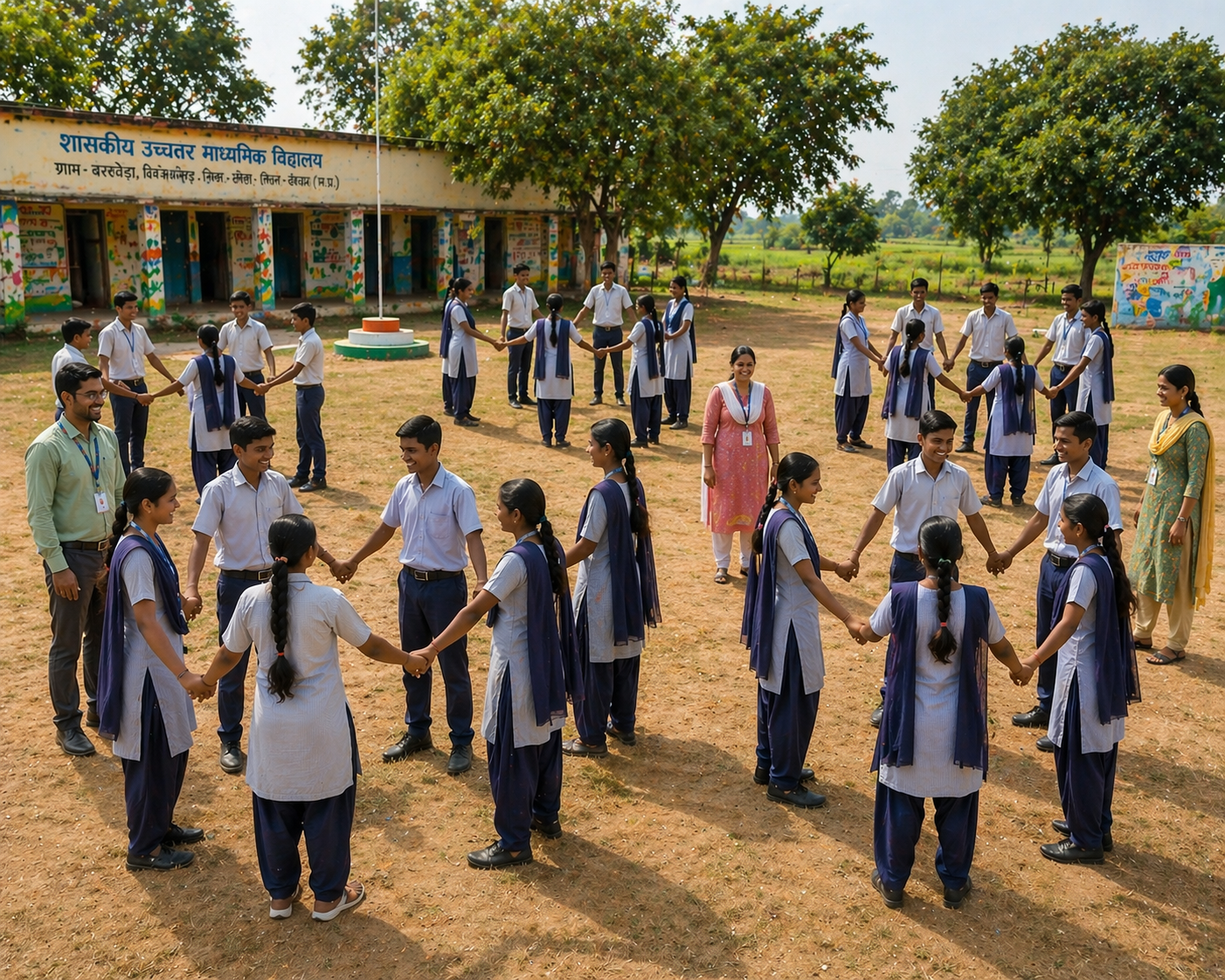
The Class to Career Project is a collaborative initiative between UNICEF, and the Government of Gujarat and Alembic CSR Foundation is their implementation partners. We joined hands with them as knowledge collaborators. It began with a simple vision: to help students of Grades 9–12 understand themselves, explore opportunities, and make informed decisions about their future.
The project set out to build a career guidance model that could be practical for classrooms, easy for teachers to deliver, and scalable across diverse school environments.
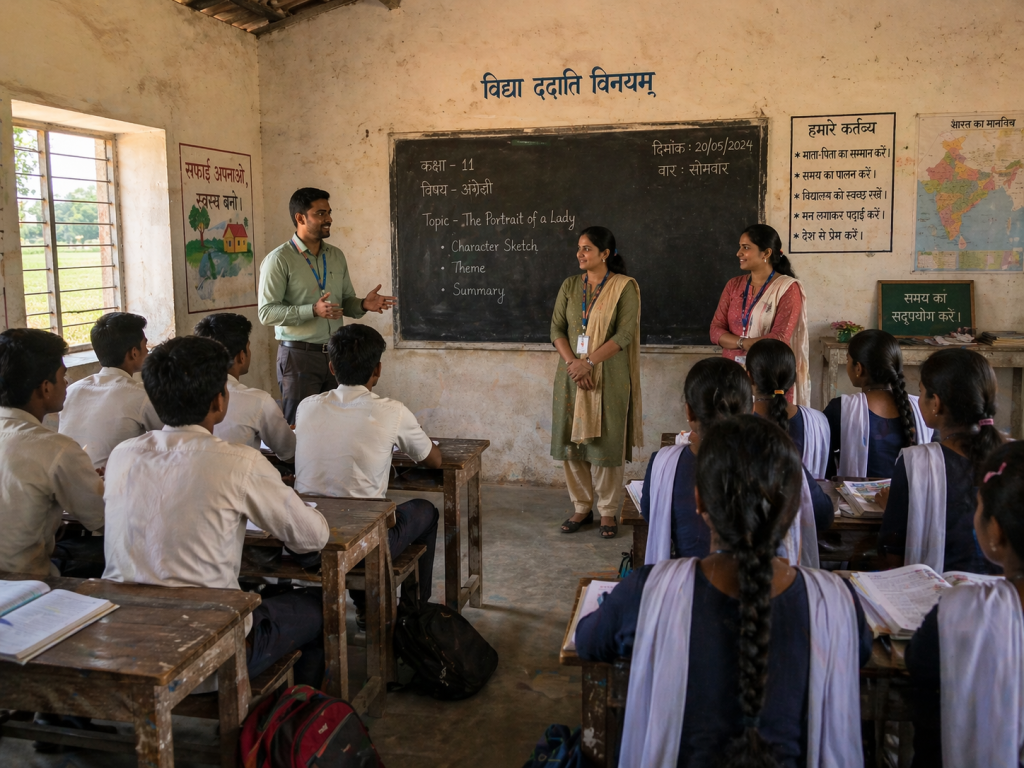
The journey started with the intention of creating a robust, replicable, and relevant framework that schools could adopt without requiring heavy infrastructure or specialized resources. To build this foundation, the team used career guidance portals developed by UNICEF, career cards, and a basic project framework. Five schools were selected as partner institutions to pilot the program and provide real classroom feedback.
Rather than treating the project as a one-time design exercise, the team followed a continuous cycle of creation, testing, and refinement. The first step involved structuring the modules and mapping activities to the needs of students. These early versions were then introduced in classrooms as trial sessions. Teachers and students became active contributors in shaping the program, as their experiences revealed gaps, challenges, and opportunities for improvement. Each round of feedback led to thoughtful refinement, after which the updated modules were tested again in different classes. This cycle of trial, reflection, and improvement continued repeatedly, allowing the program to evolve organically and become stronger with every iteration.
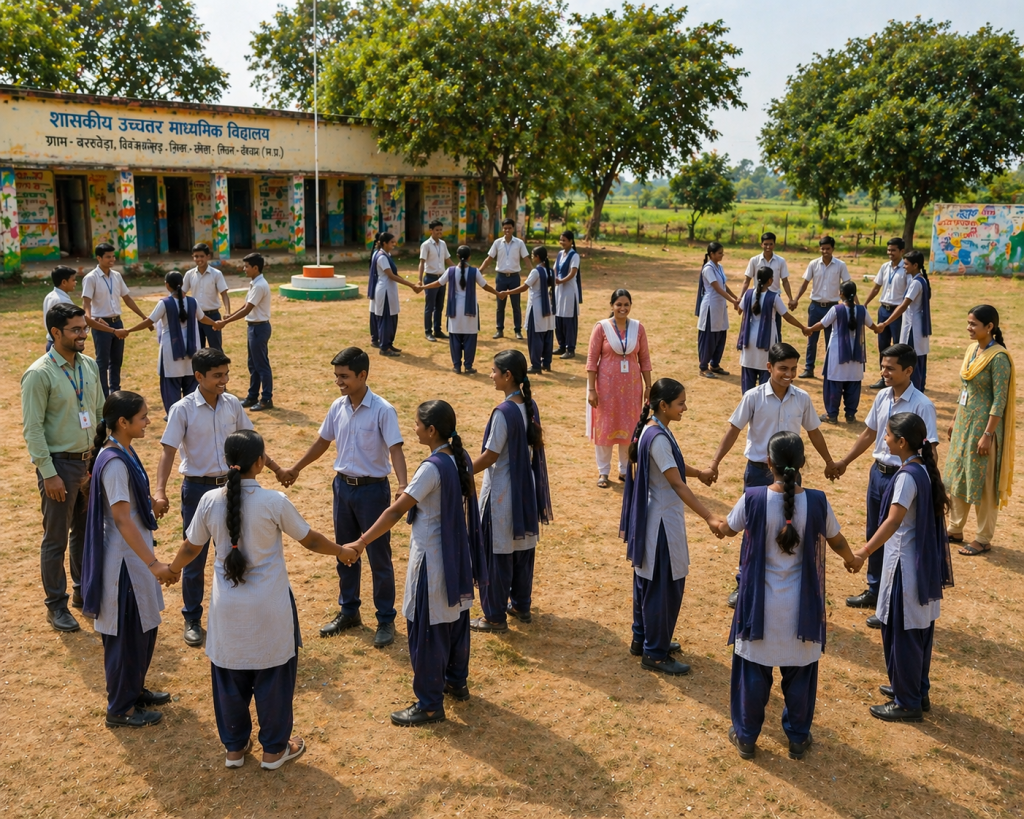
In the beginning, the plan was to develop one student workbook and one teacher handbook.
However, the learning from pilot schools quickly showed that students at different grade levels required more tailored content. The project gradually expanded to include four student workbooks—one for each grade from 9 to 12—designed using Bloom’s Taxonomy and aligned with the developmental journey of adolescents.
Alongside these, a single comprehensive teacher handbook was created to guide educators through all classroom activities across grades.
A key principle throughout the process was simplicity and accessibility. The team made a conscious decision to avoid presentations and heavy material requirements. Every activity was designed to be easy to implement, adaptable to different contexts, and practical for classrooms with varying resources. This ensured that the program could be replicated across schools without creating additional burden on teachers.
Now, the project has reached an important milestone. The draft versions of the workbooks and teacher handbook have been submitted and are currently under review at UNICEF.
This moment represents not just the completion of a development phase, but the beginning of the next chapter—bringing structured, classroom-friendly career guidance closer to students who need it most.