When we first began visiting the residential home, we carried with us a very simple intention: the children should be happy.
This home shelters boys between the ages of 6 and 18. Each child carries a story that began with challenges — some lost parents, some come from single-parent families, and some from homes that simply could not provide the care they deserved. The home already provided something deeply important: safety, food, shelter, and routine. Our role was never to change the home, but to gently strengthen the emotional and developmental ecosystem around it, while protecting the dignity and integrity of the space and the people who nurture it every day.
The Beginning: Listening Before Doing
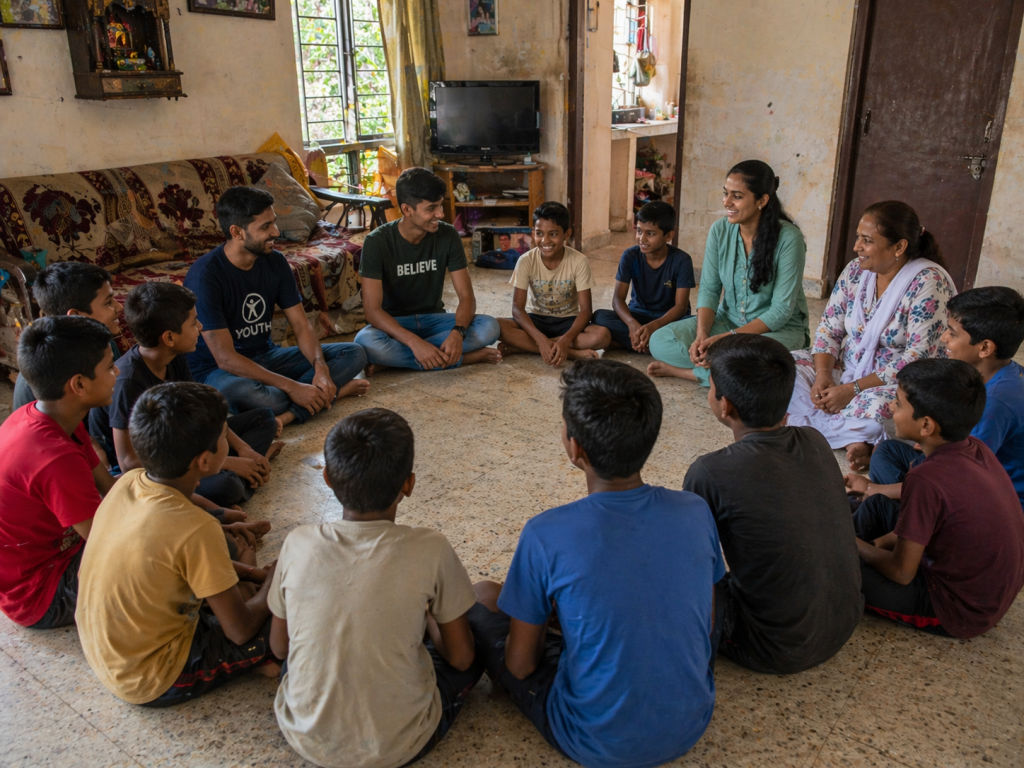
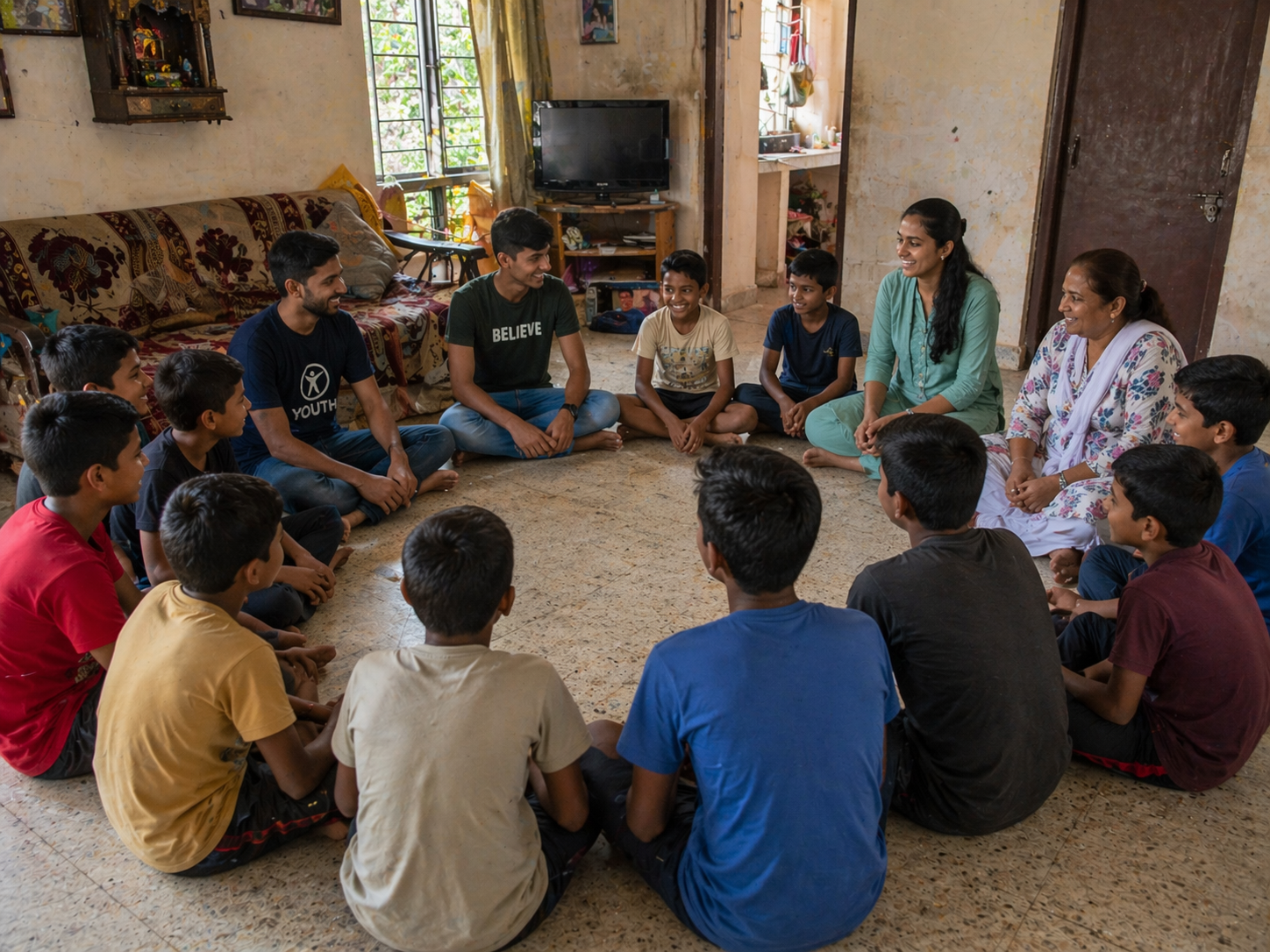
On our first few visits, we did not arrive with activities, instructions, or plans. We arrived with time.
We sat with the boys during their free hours.
We listened to their stories.
We learned their names, their favourite games, their small conflicts, and their big dreams.
Some children spoke immediately. Others watched from a distance, cautious and curious. Trust, we learned, cannot be introduced like a lesson — it must grow quietly.
The Power of Showing Up Again and Again
If one element made the biggest difference, it was consistency.
We kept coming back.
Week after week.
Just steady presence.
Children began running to the gate to greet us. The predictability of our visits created emotional safety. It told them: you matter enough for someone to come back.
And when children feel secure, they begin to grow.
Understanding That Every Child’s Need Is Different
As our bond deepened, we realised that play and routine were only one part of the puzzle. The boys had emotional, physical, and psychological needs that required specialised support.
Gradually, a small circle of experts joined the journey:
- A counsellor to help children process emotions and experiences
- A homeopathic consultant to support health and immunity
- A yoga expert to bring balance, discipline, and calm
The Turning Point: Introducing Joy With Purpose
Once the children began greeting us with smiles instead of hesitation, we introduced our engagement initiative: Mastishala.
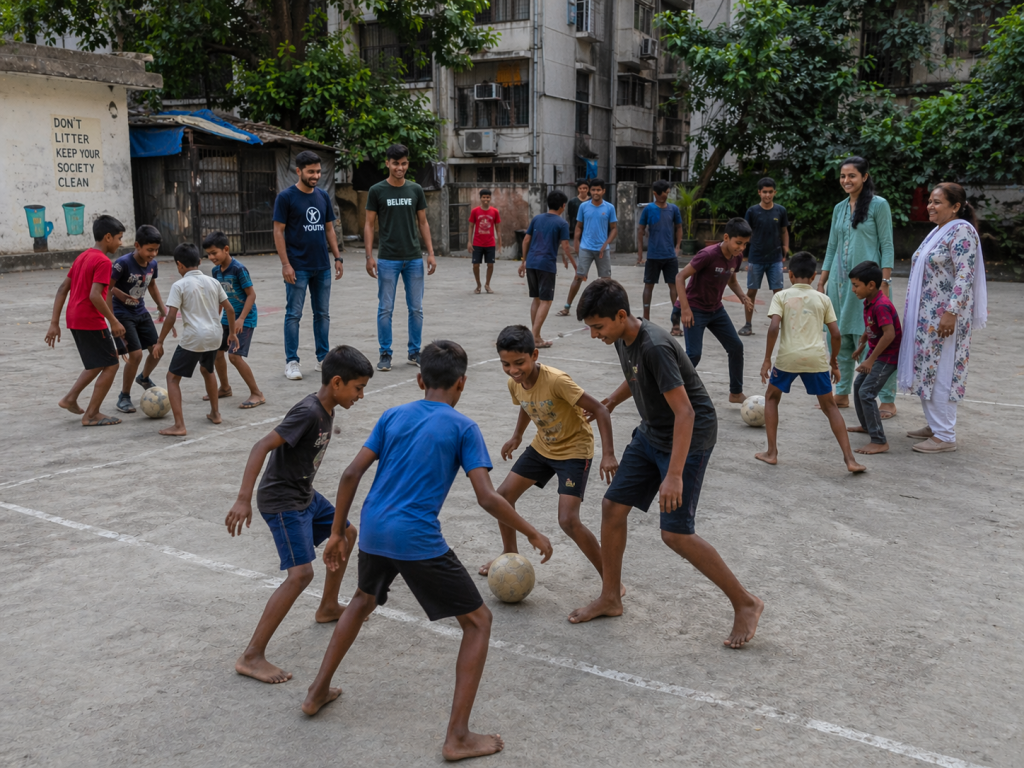
At first, it was simply games. Running, laughing, shouting, celebrating small victories — the kind of carefree joy every child deserves. But slowly, the games became a powerful learning space.
We formed teams. Suddenly, play began to carry responsibility.
The older boys learned to guide the younger ones.
The younger boys learned to listen and cooperate.
Winning became less important than teamwork.
What looked like simple play from the outside was quietly teaching:
- Responsibility
- Leadership
- Communication
- Gratitude
- Respect for rules and for each other
And something beautiful began to happen — the children started reminding each other of the rules.
From Visits to Systems
This was about creating a nurturing ecosystem where every child could grow in multiple dimensions. Over time, our efforts evolved into something more structured under the Human Harmony Program.
We began asking bigger questions:
- How can good habits continue even when we are not present?
- How can leadership among the boys be sustained?
- How can routines support everyone — children and caregivers alike?
Slowly, systems began to take shape:
- Clear responsibilities for team leaders
- Structured activity times
- Gentle behavioural expectations
- Shared ownership among the children
The home itself remained the same — but the energy within it began to shift.
The boys were not just living together anymore.
They were becoming a community.
Looking Ahead
This journey taught us something deeply hopeful:
Small, consistent, respectful efforts can create meaningful change.